OEM vs. Aftermarket Parts: What Texas Requires Insurers to Tell You
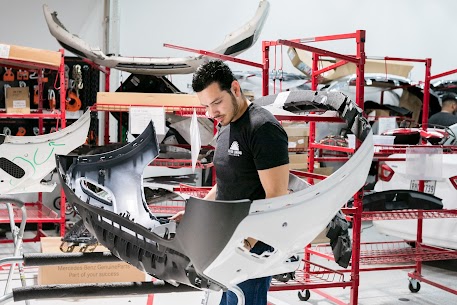
When a collision estimate lists parts, each one is one of four kinds: original equipment (OEM) from the vehicle’s manufacturer, aftermarket from an independent maker, recycled from a salvage vehicle, or reconditioned, usually a repaired bumper cover or wheel. Texas law lets an insurer base an estimate on non-OEM parts but requires it to tell you so in writing, and it cannot make you accept them as a condition of the claim. Here is how the part types differ in practice and how Silver Lining Collision handles the choice.
The four part types
- OEM: made by or for the vehicle manufacturer, identical to what came on the car. Guaranteed fit and the manufacturer’s finish, materials and crash performance.
- Aftermarket: made by another company to resemble the OEM part. Quality ranges from certified parts that meet independent fit and material standards to parts that need reworking to fit.
- Recycled (used): an OEM part removed from a salvage vehicle. Genuine, but with wear and a history; fit for things like doors and hoods, less so for safety-related parts.
- Reconditioned: a damaged part repaired and refinished for resale, most often bumper covers and alloy wheels.
Where the difference matters most
- Bumper covers and grilles on vehicles with sensors and radar: the thickness, material and mounting points affect how parking sensors and radar perform. Aftermarket covers have caused calibration failures; many manufacturers call for OEM on these.
- Headlights and taillights: beam pattern, sealing and fit. Aftermarket lamps often fog, leak or aim poorly.
- Structural and safety parts: reinforcement bars, absorbers, rails, airbags and seat belt components. Manufacturers’ procedures specify OEM, and crash performance depends on exact material and construction.
- Hoods, fenders and doors: fit and gap alignment; a quality aftermarket or recycled panel can be acceptable, but fit problems add labor.
- Wheels: reconditioned alloy wheels that were straightened or welded raise safety questions; many manufacturers prohibit it.
What Texas requires
Texas Insurance Code Chapter 1952: an insurer may not require the use of aftermarket parts as a condition of the claim, must disclose in writing when an estimate is based on non-OEM parts, and the parts used must be at least equal in kind and quality to the original in terms of fit, quality and performance. If a non-OEM part does not fit or perform, that is grounds to require the OEM part.
How to ask for OEM parts
Tell the shop and the adjuster in writing that you want OEM parts. On a vehicle under warranty, with advanced driver-assistance systems, or where the manufacturer’s procedure specifies OEM, the shop documents the reason and insurers generally approve. On older vehicles the insurer may approve OEM only with a price difference paid by the owner, which you can accept or decline per part.
Our default
OEM parts whenever possible, which is stated on our pages and backed by our certifications: manufacturer collision programs for Genesis, Kia, Nissan, Infiniti and Hyundai require OEM procedures and parts to be followed as specified. When a non-OEM part is proposed by an insurer, we tell you, explain the difference for that part on your vehicle, and let you decide.
When a non-OEM part is reasonable
A recycled OEM door or hood on an older vehicle, a certified aftermarket mirror housing with no electronics, or a reconditioned bumper cover on a vehicle without sensors can be reasonable choices that keep a repair affordable without affecting safety. The point is that it should be a disclosed choice, not a default you discover on the invoice.
Check your invoice
The final invoice lists each part and its type. Keep it; it matters for warranty, for a later diminished value claim, and for the vehicle’s history.
Repairs with the right parts
Silver Lining Collision’s Dallas, Arlington, Fort Worth and Houston shops repair to manufacturer procedures with OEM parts whenever possible and a lifetime workmanship guarantee. Call Dallas (214) 242-8727, Arlington (817) 618-2705, Fort Worth (817) 615-9575 or Houston (832) 991-8979, or contact us.

