Can a Collision Damage Your Transmission or Engine? Hidden Mechanical Damage
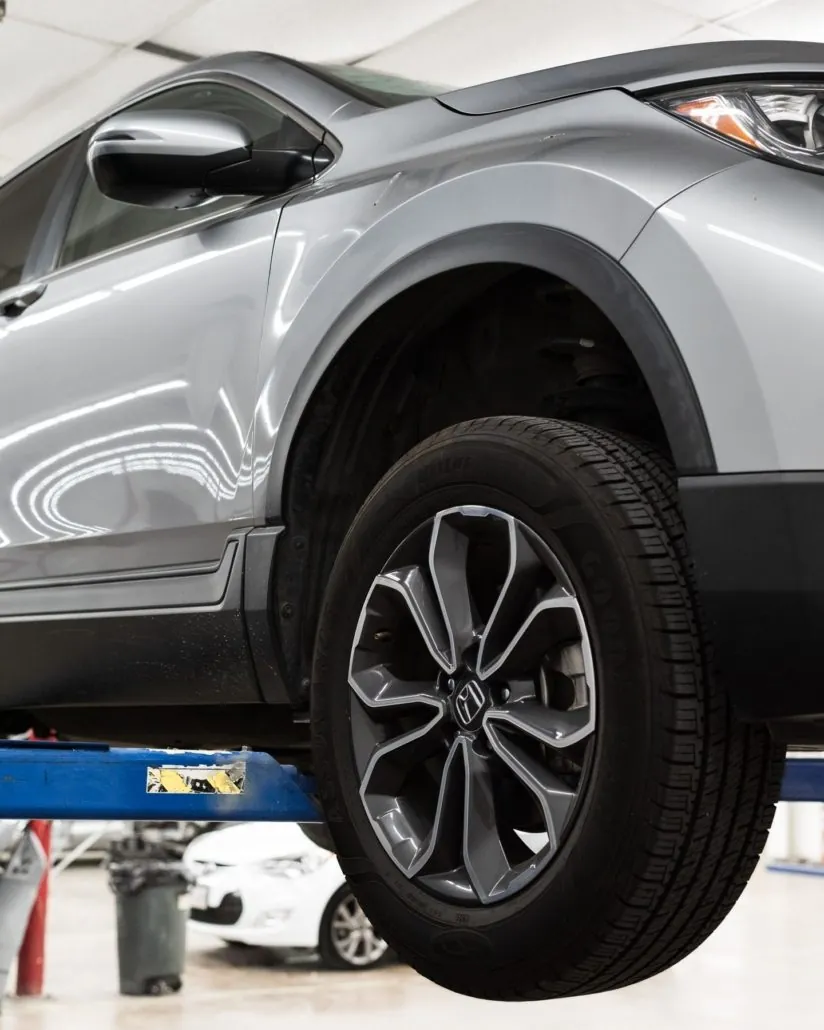
Collision repair is not only sheet metal. A front-end hit that crushes a bumper and a fender can also crack an engine mount, bend a transmission cooler line, shift a radiator into the fan, or pinch a wiring harness, and some of that shows up as a symptom days after the vehicle looks fine. Silver Lining Collision checks the mechanical side of every repair and coordinates mechanical specialists when needed. Here is what a collision can reach and how it is handled on the claim.
What a frontal hit can damage
- Engine and transmission mounts: cracked rubber or bent brackets that cause vibration, clunks on acceleration and shifting feel.
- Cooling system: radiator, condenser, coolers, hoses, fans and the fan shroud.
- Transmission cooler lines: leaks that lead to overheating and shift problems.
- Accessory drive: belts, pulleys, the alternator and the air conditioning compressor at the front of the engine.
- Oil pan and transmission pan: cracked by debris or by the engine shifting on its mounts.
- Intake and air box: cracks that let unfiltered air in.
- Battery and tray, fuse box and main harnesses near the front structure.
What a side or rear hit can damage
- Fuel tank, filler neck and evaporative system lines on rear impacts.
- Exhaust system and hangers.
- Rear differential and axle on rear-drive vehicles; CV axles and wheel bearings on any corner hit.
- Suspension components: control arms, knuckles, struts, tie rods, subframes and mounting points.
- Steering components on front corner hits.
- On EVs, the battery enclosure and cooling.
Symptoms that show up later
- Vibration at idle or under acceleration.
- Clunks over bumps or when shifting into gear.
- Pulling, uneven tire wear or a crooked steering wheel.
- Warm air conditioning, coolant smell, rising temperature gauge.
- Warning lights for the engine, transmission, ABS or airbags.
- Fluid spots where the car parks.
- Noises from the exhaust or driveline.
Any of these after a crash is connected to it until proven otherwise, and it belongs on the claim.
How the shop checks
Teardown exposes the front or rear structure and the components behind the damage. Mounts, lines, hoses, brackets and harnesses are inspected; the cooling and air conditioning systems are pressure- and leak-tested; suspension and steering are measured and the vehicle is aligned after structural work. Pre- and post-repair scans catch electrical faults in mechanical systems.
Mechanical work on a collision claim
Mechanical repairs caused by the crash are part of the claim, priced as mechanical labor on the estimate and performed in house or sublet to a specialist. Transmission internals, engine damage and some driveline work go to a dealer or transmission shop under the same claim, coordinated by the collision shop. A mechanical component that fails weeks later with a plausible connection to the crash is addressed as a supplement.
Test drives
A post-repair road test checks for noises, vibration, pulling and warning lights before delivery, and on vehicles with driver-assistance systems the dynamic calibration drive doubles as part of it.
What to tell the shop
Describe how the crash happened and anything you noticed afterward: a new noise, a smell, a light that came on and went off. That information directs the inspection.
A common sequence
A moderate front-end hit is repaired: bumper, hood, fender, lamps, radiator support. The customer picks the car up and two weeks later notices a clunk when shifting from park to drive. Back at the shop, the technician finds a cracked engine mount that was not visible until the engine moved under load; it was damaged in the crash and is replaced under a supplement with the insurer. That sequence is normal, and it is why we tell customers to call about anything new in the weeks after a repair rather than assume it is unrelated.
Repairs that go beyond the body
Silver Lining Collision inspects and repairs collision-related mechanical damage at our Dallas, Arlington, Fort Worth and Houston shops and coordinates specialists under the same claim. Call Dallas (214) 242-8727, Arlington (817) 618-2705, Fort Worth (817) 615-9575 or Houston (832) 991-8979, or read about frame straightening and structural repair.

