Is Body Filler Bad? What Proper Use Looks Like
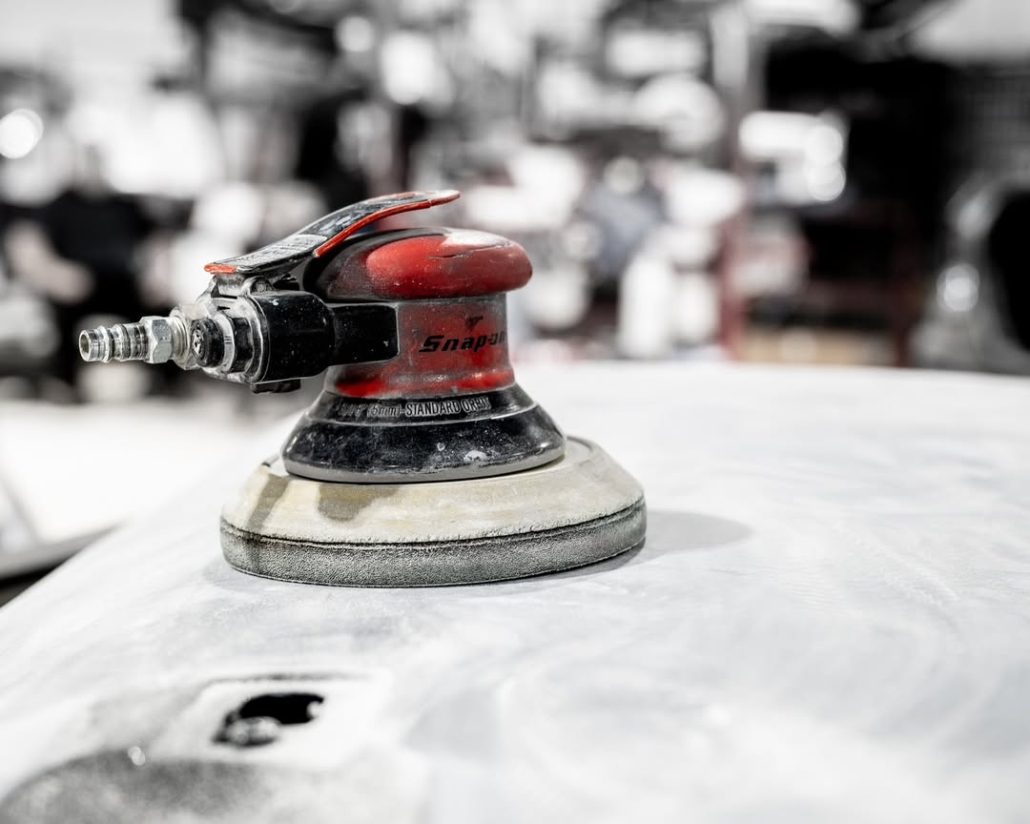
“They just filled it with Bondo” is the standard complaint about a bad repair, and it reflects a real problem: filler used to hide a dent instead of repairing it. But body filler is a legitimate material in every professional shop, applied as a thin finishing layer over metal that has already been straightened. The difference between good and bad use is thickness, placement and what was done to the metal first. Here is how Silver Lining Collision uses it and how to recognize misuse.
What filler is
A polyester resin with a hardener, mixed and spread over a prepared metal surface, then shaped and sanded to restore a panel’s exact contour. Modern fillers include lightweight, fiberglass-reinforced and premium fine-finishing types for different stages. Filler is followed by glazing putty for pinholes, then primer-surfacer, then paint.
What it is for
After a dent is pulled or hammered out, the metal is close to its original shape but not perfect; it has slight waves and low spots. A thin skim of filler, sanded with long blocks, restores the panel to a flat, true surface that paint can make invisible. That is proper use.
Thickness limits
Professionals keep filler thin, generally an eighth of an inch or less at the deepest point and feathering to nothing at the edges; manufacturers of filler publish maximums and good shops stay well under them. Beyond that, filler shrinks, cracks, and separates from the metal over time, and the repair fails. If a dent needs thick filler, the metal has not been worked enough, or the panel should be replaced.
Where it should never be used
- Over rust. Filler over corrosion bubbles within months; rust is cut out or treated and the metal repaired first.
- To fill holes or bridge gaps. Holes are welded or the panel replaced.
- On structural components or crash-energy-managing parts.
- Over bare, unprepared metal with no mechanical grip; filler bonds to properly sanded metal or epoxy primer per the product’s instructions.
- Over flexible plastic bumper covers, which take plastic repair materials instead.
Metal first, filler second
The sequence on a repairable dent: access the back of the panel, push or pull the dent out with hammers, dollies and pulling tools, relieve stretched metal if needed, check the contour, then apply a skim of filler to finish. A good technician spends most of the time on the metal and a fraction on the filler. A poor repair reverses that ratio.
Spotting a repair that leaned on filler
- A magnet that will not stick on a steel panel where it sticks elsewhere.
- Panels that feel slightly wavy or look wavy in reflections.
- Cracking or bubbling paint in a defined area a year or two after a repair.
- Paint texture that differs in one area.
- A door or fender that is noticeably heavier than its counterpart.
Filler on aluminum and plastic
Aluminum takes specific fillers made for it; standard fillers can corrode the panel. Plastic bumper covers take flexible plastic repair products, not body filler.
The role of replacement
When a dent is large, sharp, on a body line, or on a thin modern panel that will not hold its shape, replacement is the proper repair, and manufacturers’ procedures often specify it. Filler is for finishing, not for avoiding a part.
A sign of good work
A thin skim of filler over straightened metal, sealed with proper primer and paint, is how nearly every repaired panel in the industry is finished, and it lasts the life of the vehicle. The problem was never filler; it was filler instead of repair.
Repairs done in the right order
Silver Lining Collision’s technicians at our Dallas, Arlington, Fort Worth and Houston shops repair metal first and finish properly, backed by a lifetime workmanship guarantee. Call Dallas (214) 242-8727, Arlington (817) 618-2705, Fort Worth (817) 615-9575 or Houston (832) 991-8979, or read about our auto body and paint repair.

