Matte, Satin and Specialty Finishes: Can They Be Repaired?
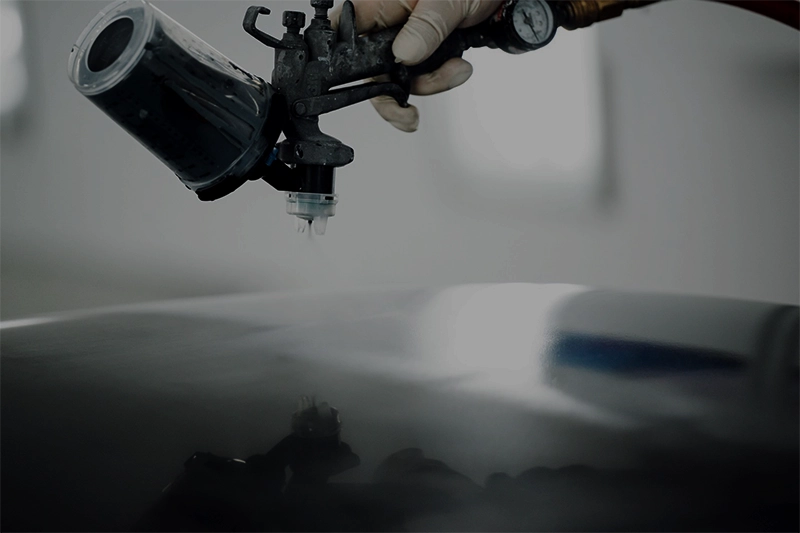
Special finishes have moved from show cars to the showroom: factory matte and satin paints, three-stage pearls, deep candy and tinted clears, and vinyl wraps and paint protection films. Each can be repaired after a collision, with different rules. Matte cannot be polished or spot-blended; pearls need exact layer control; wraps are replaced rather than repaired. Here is how Silver Lining Collision approaches each and what to ask before work starts.
Matte and satin paint
A matte finish gets its look from a clear coat formulated to scatter light. Anything that changes the surface texture, polishing, buffing, sanding, waxing, a hand touching it while curing, creates a shiny or dull patch that cannot be corrected without repainting.
- Damage that would be polished out on gloss paint, such as light scratches, swirls and scuffs, cannot be polished on matte; the panel is refinished.
- Blending is limited; matte clear is typically applied to whole panels, panel edge to panel edge, and adjacent panels may need refinishing to keep the sheen uniform.
- The clear’s sheen level must match the factory specification, and application technique affects it; experienced technicians and the manufacturer’s matte system are required.
- Care after repair follows the manufacturer’s matte guidance: specific washes, no wax, no polish.
Repairs cost more and take longer than gloss, and insurers recognize the procedures when documented.
Tri-coat and pearl finishes
Three-stage finishes layer a base color, a translucent pearl or mica mid-coat, and clear. The appearance depends on how many coats of mid-coat are applied and how, so matching requires spray-out test panels with varying mid-coat passes compared to the vehicle. Blending into adjacent panels is essential and larger than on a two-stage color. Done well, the repair is invisible; done quickly, the repaired panel reads lighter or darker at an angle.
Candy and tinted clear colors
Deep reds, blues and some metallics with tinted clears behave like tri-coats: the depth comes from layers, and matching depends on replicating them. Expect test panels and blending.
Chameleon and color-shift paints
Rare and expensive; repairable with the manufacturer’s system and extensive test panels. Panel replacement and larger blend areas are common.
Vinyl wraps
A wrapped vehicle that is damaged is repaired underneath, then the damaged wrap panels are replaced by a wrap installer, often blending the pattern or color across adjacent panels. Partial repairs of wrap rarely match; wrap material from the same batch matters. The wrap replacement is a legitimate part of the claim when the wrap was on the vehicle before the loss.
Paint protection film
Film over a damaged panel is removed, the panel repaired and refinished, cured, and new film installed by a film installer after the cure period. Insurers generally cover replacing film that was present.
Ceramic coatings
A coating is removed with the refinish and reapplied after cure by the owner’s detailer or coating installer; some insurers cover reapplication, some do not.
Questions to ask before authorizing
- Have you repaired this finish before, and which paint system will you use?
- Will you do spray-out test panels, and can I see them against the car?
- Which panels will be refinished or blended, and why?
- For matte: will the entire panel be refinished, and what sheen specification are you targeting?
- For wraps and film: which installer, and is their work part of the estimate?
Specialty finishes at Silver Lining
Our refinish technicians at the Dallas, Arlington, Fort Worth and Houston shops handle matte, tri-coat and specialty finishes with manufacturer systems and test panels, and coordinate wrap and film installers. Call Dallas (214) 242-8727, Arlington (817) 618-2705, Fort Worth (817) 615-9575 or Houston (832) 991-8979, or read about our auto body and paint repair.

