Why Shops Tear Down a Vehicle Before Writing the Final Estimate
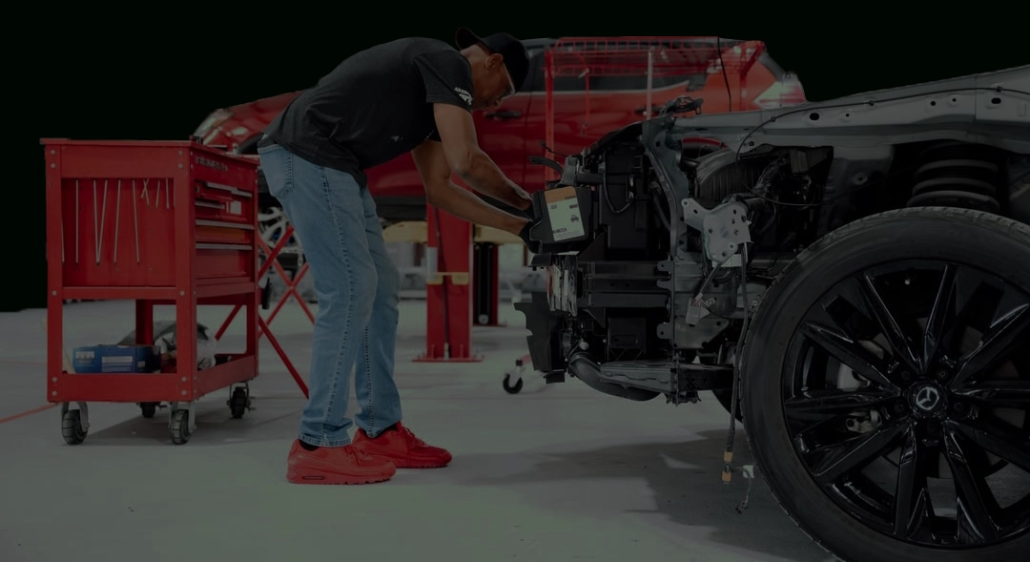
The first estimate on a collision repair is a starting point. The repair plan is written after teardown, when the damaged area is disassembled, every affected part is identified, and the manufacturer’s procedures are checked against what is actually there. Silver Lining Collision tears down early on every repair, because it shortens the overall timeline and produces a complete, documented plan that insurers approve. Here is what the step involves and why it matters to you.
What teardown is
Technicians remove the damaged exterior parts, bumper covers, lamps, grilles, fenders, trim, and expose the structure and components behind them. They measure, photograph and inspect: absorbers and reinforcements, radiator supports, rails, brackets, sensors, wiring, cooling components, suspension mounting points. On a side or rear hit, doors and interior trim may come off to inspect pillars and quarter panels.
What it finds
- Damage hidden behind the visible panels.
- Parts that look fine but are deformed enough to require replacement under the procedure.
- Single-use components, such as crushed absorbers and reinforcements, that must be replaced regardless of appearance.
- Sensor and wiring damage that will drive scanning and calibration.
- Prior damage or previous repairs that affect the plan.
Why it comes early
Parts cannot be ordered with confidence until the full list exists, and supplements cannot be submitted until the damage is documented. A shop that waits to tear down until the first approved parts arrive discovers the hidden damage then, orders more parts, waits again, and the repair stretches. Early teardown front-loads the discovery and compresses the rest.
How it affects the estimate
The teardown produces the repair plan: the complete parts list by type, the labor operations, refinish, structural measurements, scanning and calibration, and corrosion protection. The difference between this plan and the first estimate is submitted as a supplement with photos and procedure references.
Insurers and teardown
Insurers generally prefer a documented teardown, because the resulting supplement is specific and defensible. Many require photos of each item. A re-inspection may follow for large supplements; the adjuster sees the disassembled vehicle rather than guessing from photos of a bumper cover.
Authorization
Teardown is a repair operation, and the shop asks you to authorize it, because it commits the vehicle to the process. Once disassembled, the vehicle is not drivable until repaired or reassembled. Authorizing teardown does not obligate you to complete the repair, but reassembly of an unrepaired vehicle is billable labor, and that leads to the next point.
If the vehicle is totaled after teardown
Sometimes teardown reveals enough damage that the repair cost crosses the insurer’s total-loss threshold. The teardown labor is a legitimate charge on the claim, paid by the insurer, because it was necessary to establish the extent of damage. The vehicle is then moved to the insurer’s salvage process. You are not charged for discovering that the car cannot be economically repaired.
What you should receive
Photos of the teardown, the revised estimate or supplement, an updated parts list, and a revised timeline. We provide these for every repair at our Dallas, Arlington, Fort Worth and Houston shops.
What it means for a shop that skips it
A shop that repairs strictly to a photo estimate without teardown is repairing what the photo showed and leaving the rest, or absorbing the extra by cutting steps. Thorough teardown is the single biggest difference between a complete repair and a cosmetic one.
Start with a complete plan
Silver Lining Collision tears down, documents and writes to manufacturer procedures on every repair, with a lifetime workmanship guarantee. Call Dallas (214) 242-8727, Arlington (817) 618-2705, Fort Worth (817) 615-9575 or Houston (832) 991-8979, or send us a message.

