Third-Party Claims: Getting Your Car Repaired When the Other Driver’s Insurer Pays
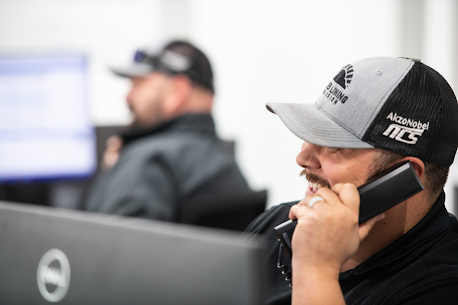
When another driver causes a crash, you can claim against their liability insurance directly. It is called a third-party claim, and done right it costs you nothing: no deductible, no claim on your own policy, a rental while the car is repaired, and a diminished value claim on top. The catch is that the other driver’s insurer owes you a legal duty, not a customer relationship, and it moves at its own pace. Here is how Silver Lining Collision helps customers through third-party claims at our Texas shops.
Step 1: Report to both insurers
Report the crash to your own insurer even if you intend to claim against the other driver. It protects you if the other party’s coverage falls through, and your insurer can advise on using your own coverage and recovering later.
Step 2: The other insurer investigates liability
The third-party insurer takes statements from both drivers, reviews the police report and photos, and decides whether its driver was at fault. This can take days or weeks. Until liability is accepted, the insurer will not authorize repairs or a rental. Your scene photos and the crash report shorten this phase.
Step 3: Inspection and estimate
Once liability is accepted, the insurer inspects the vehicle, usually by photos or at the shop, and writes an estimate. The shop tears down, documents hidden damage, and submits supplements as on any claim.
What the third-party insurer owes
- The reasonable cost to repair the vehicle to its pre-loss condition, with no deductible.
- A comparable rental for the reasonable repair period.
- Towing and reasonable storage.
- Diminished value, which is claimed separately after the repair.
- Property inside the vehicle that was damaged, such as a car seat.
When the insurer is slow or disputes fault
- Keep a log of every call and email.
- Ask for the adjuster’s supervisor if responses lag.
- Consider switching to your own collision coverage: your insurer repairs the car now, less your deductible, and pursues the other carrier through subrogation; your deductible is refunded when it recovers.
- A complaint to the Texas Department of Insurance is available for unreasonable delay.
The repair itself
Identical to any other: manufacturer procedures, OEM parts where specified and disclosed, scanning, calibration, and our lifetime workmanship guarantee. The third-party insurer may try to apply its own parts preferences; Texas law lets you decline non-OEM parts, and we document why OEM is required where it is.
Partial fault
Texas uses a comparative fault rule. If you are found partly at fault, the other insurer pays its driver’s share of your damage. For the rest, your own collision coverage applies, less your deductible.
Using your own coverage first
Many customers with collision coverage file on their own policy for speed and let the insurers settle between themselves. The trade-off is paying the deductible up front and waiting for subrogation to refund it. Not-at-fault claims are generally not rated against you, but check with your agent.
What we handle
Documentation, teardown, supplements, communication with the third-party adjuster, rental timing, and the repair file you will need for diminished value. What we cannot do is accept liability on the insurer’s behalf or speed up its investigation; your documentation and persistence do that.
Recorded statements
The other driver’s insurer will ask you for a recorded statement about the crash. You are not obligated to give one to a third-party insurer, and it is reasonable to provide the facts in writing instead, or to keep a recorded statement brief and factual: where, when, what happened, what was damaged. Do not speculate about speed, distance or fault, and do not describe injuries you have not had evaluated. The statement becomes part of the liability decision, and precision helps you; guesses do not.
Start the file
Silver Lining Collision’s Dallas, Arlington, Fort Worth and Houston shops handle third-party claims every week. Call Dallas (214) 242-8727, Arlington (817) 618-2705, Fort Worth (817) 615-9575 or Houston (832) 991-8979, or contact us.

