Is It Safe to Drive with a Cracked Bumper or a Damaged Sensor?
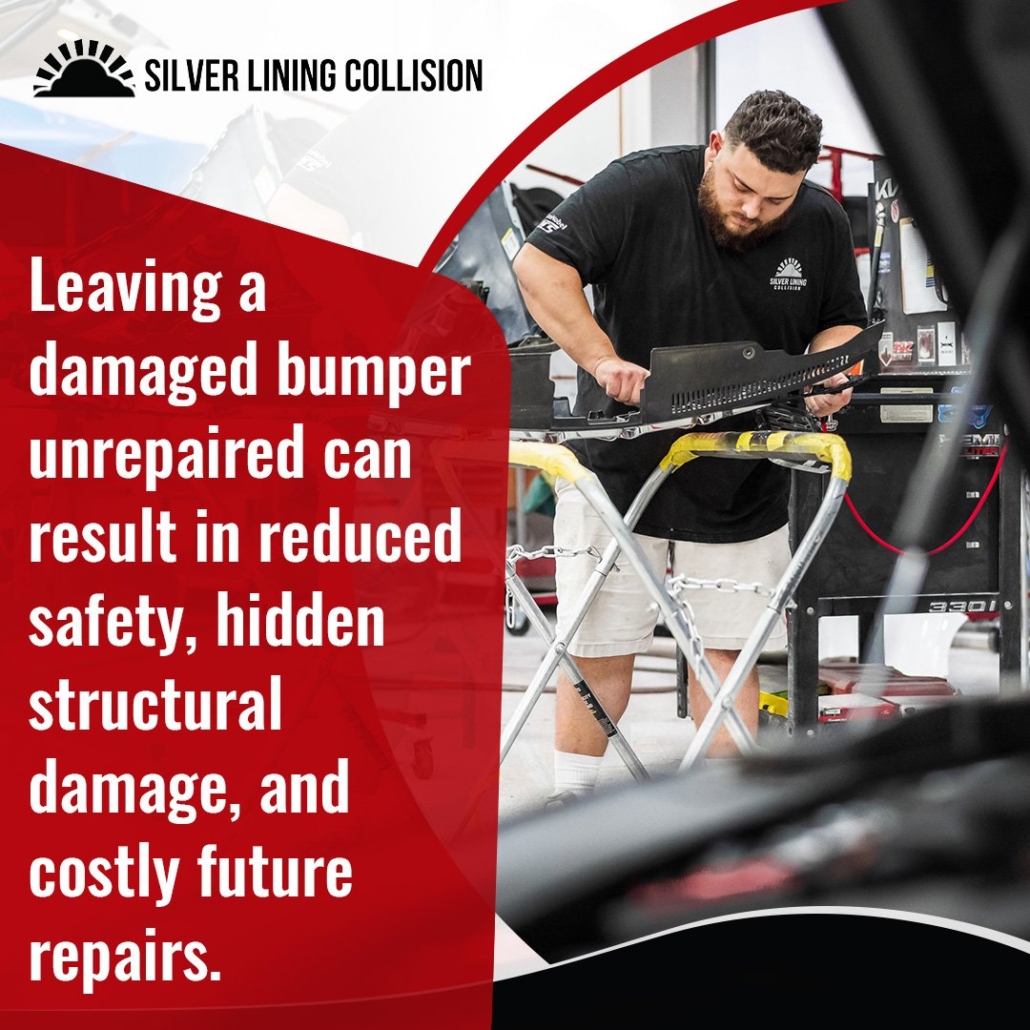
Many drivers in Dallas-Fort Worth and Houston live with a cracked bumper cover for months, and often that is fine. A cosmetic crack in the plastic cover does not affect how the car drives or protects you. What matters is what is behind and around the cover: the absorber and reinforcement that do the crash work, the lamps, and on newer vehicles the parking sensors, radar and cameras that the cover houses. Here is how Silver Lining Collision assesses whether a damaged bumper is drivable and what warning signs to take seriously.
Usually safe to drive
- A crack or scuff in the bumper cover with the cover still firmly attached.
- Minor dents with no broken lamps and no warning lights.
- Damage where the vehicle drives, steers, brakes and tracks normally and nothing is loose.
Drive it, but schedule an inspection; cracks spread, and a cover that catches wind or a curb can tear loose.
Not safe, or not legal, to drive
- A cover hanging loose or dragging; it can catch the road, come off at speed, or pull wiring with it.
- Exposed or crushed energy absorber or reinforcement bar; the bumper will not perform in the next impact.
- Broken headlights, taillights or turn signals; a legal and safety issue, especially at night.
- Sharp protruding edges that could injure a pedestrian.
- Fluid leaks, steam, or a grinding or rubbing sound, which mean the damage reached the cooling system, the tire or the suspension.
- An airbag warning light; the restraint system may be disabled.
- A rear-end hit where the trunk or hatch will not latch.
Damaged sensors and radar
A bumper hit on a vehicle with parking sensors, blind-spot monitoring, rear cross-traffic alert or adaptive cruise control can knock the sensor or radar out of alignment or damage it without a warning light. The system may stop working, warn late, or warn about the wrong lane. If a driver-assistance warning appears after a hit, or the system behaves oddly, treat it as not working and drive accordingly until it is scanned and calibrated. A pre-repair scan finds these faults in minutes.
Warning lights after a bumper hit
- Check engine or electronic throttle warnings: a sensor connector or harness near the impact.
- Airbag or SRS: a crash sensor or wiring; serious.
- ABS or traction control: a wheel speed sensor near the impact.
- Driver-assistance warnings: cameras and radar needing inspection and calibration.
Any of these calls for a scan before the vehicle is driven routinely.
Insurance timing
Driving on a damaged bumper does not void a claim, but delaying the claim can complicate it, and additional damage from a cracked cover tearing loose may be argued as a separate event. Open the claim and get the inspection even if you plan to drive the car until the repair.
Getting it assessed without a trip
Silver Lining Collision offers free vehicle pick-up and drop-off, and photos sent to the shop give our estimators a first read on whether the damage is cosmetic or more. For a vehicle that may not be safe, we arrange the pickup.
What the repair involves
A cosmetic cover repair or replacement, refinishing with blending, and replacement of any absorber, reinforcement, lamp or sensor that was affected, followed by a post-repair scan and calibration of any system that was disturbed.
A quick self-check you can do in a parking lot
With the engine running, walk around the vehicle and look at the dash from the driver’s seat for any amber or red warning. Back slowly toward a wall and listen for the parking sensors to chirp at a consistent distance. Have someone walk behind the vehicle while it is in reverse and watch for the cross-traffic warning if the car has one. Press on the bumper cover gently: it should be firm and attached, not loose or hanging. Look under the front for anything dragging. If all of that is normal, the vehicle is reasonable to drive to the shop; if any of it is not, call for a pickup.
When in doubt, ask
Call the Silver Lining Collision shop nearest you and describe what you see: Dallas (214) 242-8727, Arlington (817) 618-2705, Fort Worth (817) 615-9575 or Houston (832) 991-8979, or contact us online. Learn about our vehicle calibration services.

