Aluminum Body Panels: Why They Need Different Tools and Training
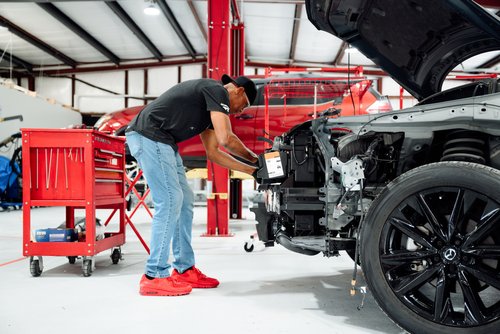
Aluminum hoods and trunk lids have been common for years, and many trucks, SUVs and luxury vehicles now use aluminum doors, fenders, and even full body structures. Aluminum is lighter and does not rust, and it behaves nothing like steel when it is damaged. Repairing it correctly needs a dedicated work area, separate tools, and manufacturer procedures that replace welding with rivets and adhesives. Here is why, and how Silver Lining Collision approaches aluminum repairs.
How aluminum differs from steel in a repair
- No memory: steel tends to spring back toward its original shape when worked; aluminum does not. Dents have to be worked with heat and more care, and work-hardened areas can crack.
- Heat sensitivity: aluminum alloys lose strength if overheated, and the temperature window for repair is narrow and measured.
- Contamination: steel particles embedded in aluminum cause galvanic corrosion. Tools used on steel cannot be used on aluminum, and dust from steel work cannot settle on aluminum panels.
- Joining: aluminum structures are mostly joined with self-piercing rivets, structural adhesives and specific welding processes, not the spot welds used on steel.
What a proper aluminum setup looks like
- A separate, enclosed or curtained work area with its own dust extraction.
- A dedicated tool set: hammers, dollies, sanders, drills and clamps used only on aluminum.
- Aluminum-specific dent repair equipment that bonds pins to the panel and uses controlled heat.
- Rivet guns, adhesive dispensing equipment and the fasteners the manufacturer specifies.
- Technicians trained and certified on aluminum repair.
Dent repair on aluminum
Small dents on aluminum panels can sometimes be addressed with paintless dent repair by technicians experienced with aluminum, which is stiffer and less forgiving. Larger dents are repaired with bonded pulling pins and careful heat, or the panel is replaced. Because aluminum does not stretch and shrink like steel, replacement is more common than on a steel panel with the same damage.
Structural aluminum
On vehicles with aluminum structures, damaged sections are replaced at the manufacturer’s defined cut points using rivets and adhesives per the procedure. Measuring systems confirm dimensions before and after. These repairs are only done by shops certified for that manufacturer; the procedures and parts are not available otherwise.
How to know if your vehicle has aluminum panels
A magnet will not stick to aluminum. Many trucks and SUVs from the last decade have aluminum hoods, and some have aluminum doors, fenders and tailgates; several luxury brands use aluminum extensively. The shop confirms during the estimate, because the material changes the repair plan and the parts list.
Why it matters to you
An aluminum panel repaired with steel-shop tools and techniques can crack, corrode where steel particles were embedded, or fail to hold its shape. Structural aluminum repaired without the specified rivets and adhesives will not perform in the next crash. The repair may look fine on delivery and fail later.
Insurance and aluminum
Aluminum repairs take more time and specialized materials, and estimates reflect it. Insurers recognize the manufacturer procedures; documentation gets the operations approved.
Certification and training
Manufacturer collision certifications, such as the Genesis, Kia, Nissan, Infiniti and Hyundai programs Silver Lining holds and the Assured Performance certification across our shops, require the equipment and training to repair the materials those vehicles use, audited rather than self-declared.
Ask before you choose a shop
If your vehicle has aluminum panels or structure, ask the shop whether it has a dedicated aluminum area and trained technicians. Call Silver Lining Collision in Dallas (214) 242-8727, Arlington (817) 618-2705, Fort Worth (817) 615-9575 or Houston (832) 991-8979, or read about our frame straightening and structural repair.

